

Proudly Made in the USA
Since we are a manufacturer of molded plastic, soft sewn and fabricated cases we can customize cases to fit your needs no matter the type of case or bag you need. We can do custom die cut foam inserts, custom foam lining, rigid and moveable dividers, and lid organizers.
A well designed case interior starts with the equipment or product, not a standard layout. Size, shape, weight, sensitivity, accessories, intended use, industry, and transportation requirements can all influence the interior configuration. These factors are considered together as part of the custom equipment case design process.
We can combine custom case foam, fitted inserts, dividers, lining, compartments, and lid storage around the protection, organization, and access requirements of the equipment.


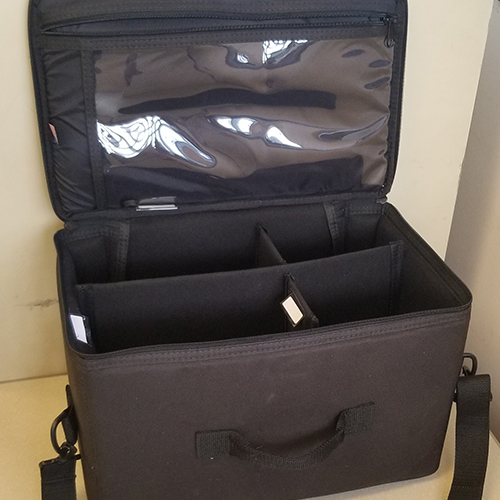


Different products and applications require different approaches to cushioning, separation, organization, and accessibility. The right interior configuration depends on what is being carried and how the case will be used.
The goal is not simply to fill empty space. The interior should help control movement, maintain separation between components, support vulnerable areas, and make practical use of the available case space.
Selecting the right custom case foam starts with understanding the equipment or product, how it will be used, and the conditions the case will encounter. There is no single foam material or configuration that works for every application.
Dimensions, shape, weight, fragility, sensitive areas, accessories, positioning, transportation, and operating environment can all affect the interior design.
Industry and application matter as well. Medical equipment cases may require fitted foam that keeps sensitive instruments and devices securely positioned, while industrial and OEM equipment cases may require more supportive configurations for heavier or irregularly shaped equipment.
Sales and marketing cases may prioritize organization, presentation, and quick access, while trade show cases may need fitted spaces for displays, electronics, and accessories.
Transportation adds another consideration. Equipment that is regularly shipped, carried between job sites, or transported to events can experience different handling conditions. The requirements involved in protecting sensitive medical equipment during transportation can differ from those involved in selecting cases for industrial equipment.
Case Design works with polyurethane and polyethylene foam for custom case interiors.
Selecting the material is only part of the process. Foam can be cut and configured around the product’s shape and arrangement so individual components have designated positions. Case Design’s custom case manufacturing process includes the fabrication of fitted custom foam interiors.
Yes. The exterior construction and interior configuration should be considered together.
Custom hard cases can incorporate fitted foam, lining, dividers, and compartments when equipment requires a more rigid exterior structure.
Custom soft carrying cases can use padding, compartments, pockets, and dividers when portability, accessibility, and flexibility are greater priorities.
The appropriate construction depends on the equipment, transportation method, environment, and handling requirements. Case Design’s comparison of hard cases and soft cases explains how protection, portability, and customization can influence that decision.
The more accurately the equipment and intended use are understood, the more effectively the interior can be planned.
Evaluating these factors together helps Case Design develop the exterior construction and interior configuration around the complete application.
Foam lining adds cushioning to the interior surfaces of a case. A custom foam insert creates defined spaces around specific pieces of equipment or components. Some applications may use both.
Custom foam is well suited to equipment that needs consistent placement and fitted support. Moveable dividers provide greater flexibility when the contents or configuration may change between uses.
Yes. An interior can combine fitted spaces, compartments, dividers, and lid organization so primary equipment and related accessories can be stored within the same case.
Case Design Corporation can evaluate what you need to carry, how it will be handled, and how the contents should be arranged to determine the appropriate case construction and interior configuration. Contact Case Design Corporation to discuss your application.