

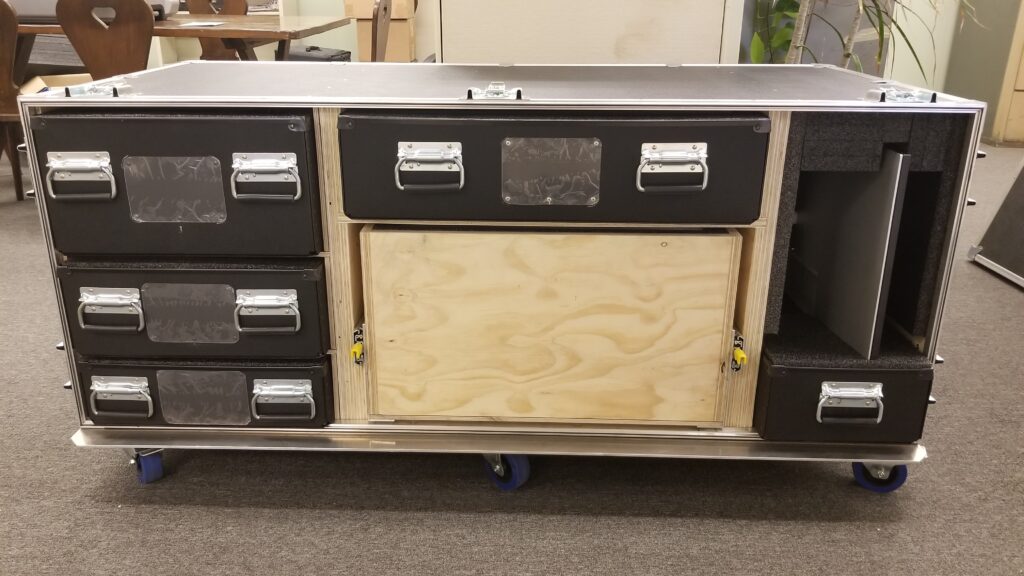
A case is truly rugged when its construction, interior, hardware, and handling features are matched to the item inside and the conditions it will face. A thick shell alone does not guarantee protection. The case must also control movement, support the loaded weight, remain practical to carry or roll, and withstand repeated use.
Case Design Corporation creates custom protective carrying, shipping, storage, and presentation solutions designed around the equipment or products being transported. From custom hard and road cases to molded containers, soft cases, and sewn bags, ruggedness is not defined by one material or case style. It comes from designing the complete solution around the job it must perform.
Ruggedness Begins With the Right Case Type
The first decision is not how thick the case should be. It is which type of case fits the equipment and its transportation cycle.
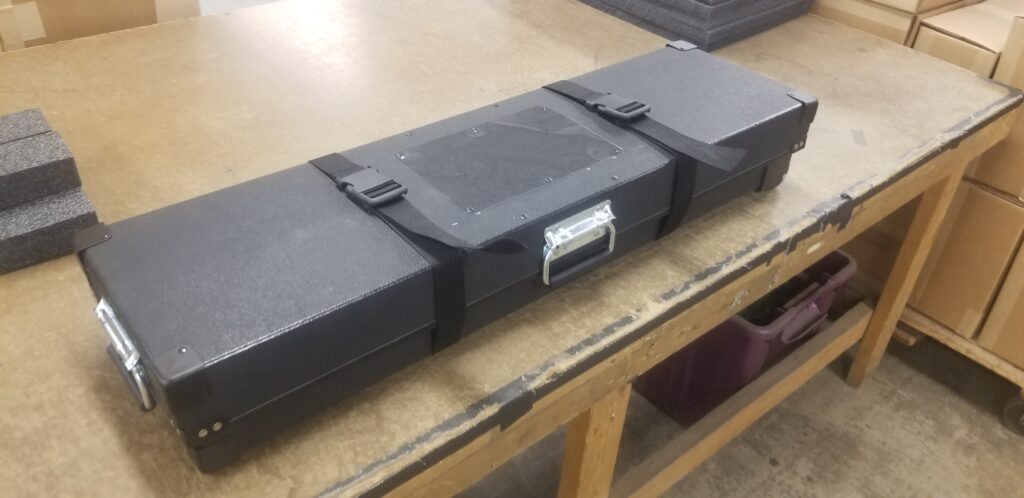
A custom road case used for frequent transport faces different demands from a presentation case carried between appointments. A trade show display may need rigid protection, while lightweight samples or tools may be better suited to padded soft construction. Case Design Corporation’s full range of custom and stock cases provides several starting points.
Important selection factors include:
- Equipment dimensions, shape, and loaded weight
- Fragile surfaces or sensitive components
- Frequency and method of transportation
- Exposure to impact, vibration, dust, or moisture
- Lifting, rolling, stacking, and access requirements
A rugged case should provide the required protection without adding size, weight, or complexity the application does not need.
The Structure Must Handle the Expected Stress
Rigid construction helps resist impact, abrasion, compression, and excessive flex. Performance, however, depends on the complete structure, including panels or molded sections, corners, seams, closures, and hardware attachment points.
Case Design Corporation’s custom hard cases include molded and fabricated constructions that can be configured around different equipment sizes and handling requirements. The appropriate construction depends on the contents, loaded weight, travel method, interior support, and access needs.
Stress is rarely distributed evenly. Corners, handles, and wheel mounts often receive concentrated force. A strong shell cannot compensate for working components that are not suited to the load.
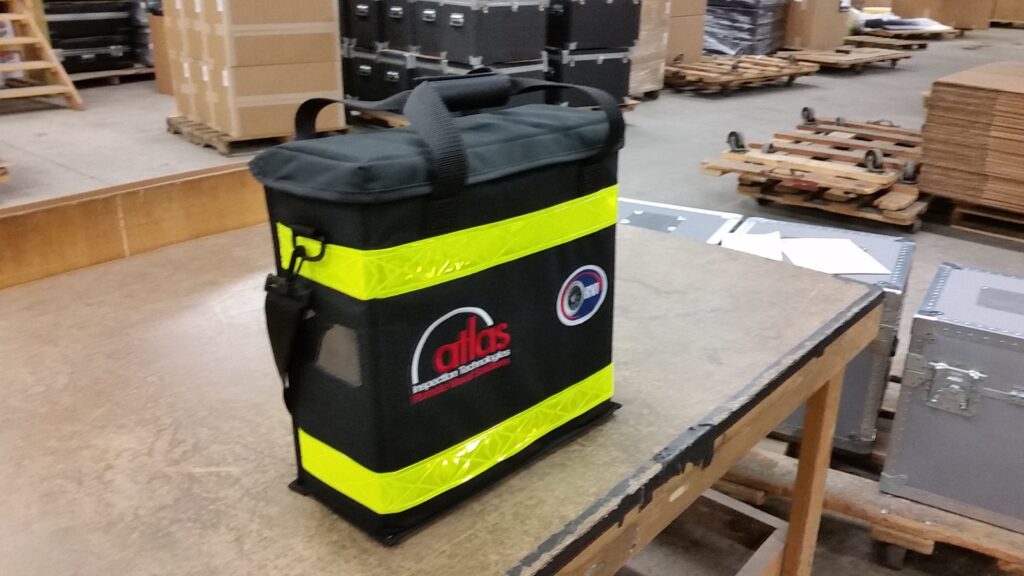
Soft construction should be evaluated differently. Custom soft cases and sewn bags can incorporate padding, compartments, carrying features, and branding. They do not provide the same compression resistance as a rigid shell, but they can be a rugged choice for lighter equipment, tools, samples, and everyday transport.
Interior Protection Keeps the Contents Under Control
The exterior handles forces from outside the case. The interior determines how those forces reach the equipment.
A properly designed interior limits movement, separates accessories, and supports vulnerable areas. It may use custom-cut foam, layered cushioning, dividers, trays, pockets, straps, or a combination of features.
The fit must reflect the equipment’s weight and fragility. An opening that is too loose allows the item to shift, while poorly placed support can put pressure on delicate controls, connectors, or surfaces. Accessories also need dedicated locations so they do not strike the primary equipment during transit.
Case Design Corporation’s guide to custom case foam and fitted interiors explains how polyurethane and polyethylene foam can serve different cushioning and support needs. A planned layout also makes missing tools or components easier to identify before the case moves.
Hardware and Mobility Must Match the Loaded Case
Handles, latches, hinges, wheels, buckles, and fasteners are working parts of the case. Their suitability should be evaluated against the total loaded weight and the way the case will be handled.
Handle placement affects balance during lifting, closures must remain secure through repeated use, and hinges must support the intended access method. Shipping cases with wheels also require attention to wheel placement, mounting points, surface conditions, and the loaded center of gravity.
A rolling case should remain stable while turning and manageable at doorways, loading areas, warehouses, or job sites. Replaceable wheels, latches, handles, or interior components can also extend its useful life.
Rugged, ATA-Style, and Tested Are Not the Same Claim
“Rugged” is a general description, not proof that a case meets a particular test or specification. Terms such as heavy-duty, road case, flight case, and ATA-style may describe construction or intended use, but buyers should not assume that they confirm tested performance.
For air-transport applications, ATA Spec 300 provides packaging and testing guidelines for airline supplies, components, and shipping containers. When a project requires a standard, confirm the applicable revision, test method, documentation, and exact claim the manufacturer can support.
Define the Risks Before Choosing the Case
Start by documenting what the case must carry and what will happen to it. Dimensions, weight, photographs or drawings, fragile areas, accessories, travel methods, handling frequency, environmental exposure, and loading requirements all affect the final design.
Case Design Corporation develops protective carrying, shipping, storage, and presentation solutions for equipment, products, tools, samples, and displays. Buyers can discuss their application and case requirements with the team to determine the appropriate structure, interior, hardware, and carrying or rolling features.
Frequently Asked Questions
Yes. A soft case can be rugged for lighter equipment and repeated daily use when its material, padding, stitching, closures, and carrying features match the application, although it will not provide the same compression resistance as a rigid case.
A stock case can be appropriate when its dimensions, interior, load capacity, and handling features fit the equipment. Custom construction is more useful when the contents have an unusual shape, require precise support, include multiple accessories, or face specialized transportation conditions.
Many cases can be serviced with replacement hardware or a new interior insert, but the options depend on the original design and component attachment. Inspecting high-wear areas can help identify repairs before the case’s protective function is affected.
