

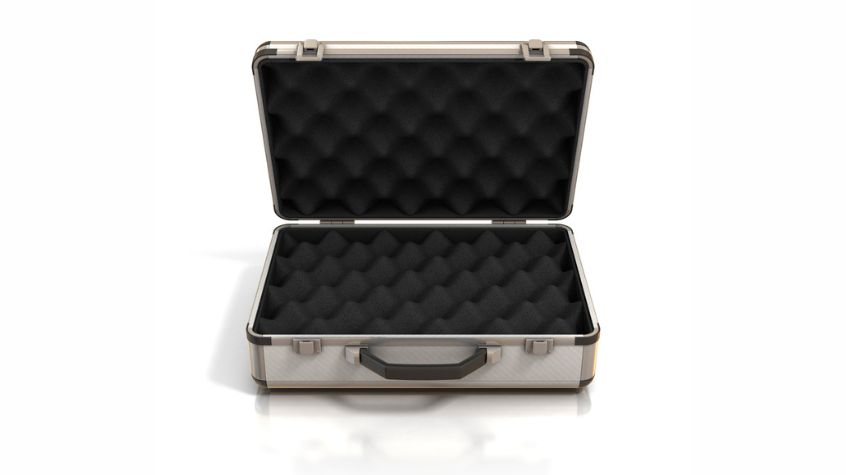
Protecting high-value equipment is more than choosing a rugged case. The real secret lies inside, specifically in custom foam inserts designed to shield each component from impact, vibration, moisture, and travel fatigue. Whether you rely on custom hard cases, padded cases, or padded bags, the interior determines how well your equipment survives transport.
Below, you will find a clear explanation of how custom-cut foam inserts enhance protection, why so many industries depend on them, and what to consider when selecting the right foam for your application. For more detail on the industries that use these solutions, visit the Case Design Corporation page for Industries Served.
What Makes Custom Foam Inserts More Protective Than Standard Foam?
A standard pick and pluck sheet may seem convenient, but it rarely delivers long-term stability or precise cushioning. Custom case foam is engineered around exact shapes, weights, and fragility levels. Each contour is designed to distribute impact evenly while preventing equipment from shifting inside the case.
Custom foam protects equipment by providing:
- A precision fit created through CNC machining or die cutting
- Material performance matched to the equipment’s weight and sensitivity
- Even load distribution that prevents drops or vibration from reaching the product
For an overview of available interior options, visit the Case Design Corporation page for Interiors.
Why Are Die-Cut Foam Inserts Ideal for High-Value or Sensitive Equipment?
When accuracy matters, die-cut foam inserts deliver consistent and repeatable precision. They are widely used in aerospace, medical, audiovisual, and industrial environments where tools and devices must be held securely and presented neatly.
Die-cut foam offers several benefits:
- Identical inserts for repeated production runs
- Clean and smooth edges
- Tight tolerances for delicate components
- Long-term durability for frequent transport
This level of consistency is essential for field teams, training environments, and service crews that depend on standardized layouts.
How Do Foam Materials Affect Protection?
Foam type influences performance as much as the shape of the insert. Most custom foam inserts use either open-cell or closed-cell foam. Understanding the difference helps match your material selection with your real-world application.
Open-cell foam
- Soft, breathable structure
- Very good shock absorption
- Best for delicate or lightweight items
Closed-cell foam
- More rigid and moisture resistant
- Designed for heavier or sharp-edged equipment
- Effective in environments with humidity or liquid exposure
To learn more about foam permeability and structure, this outside resource helps explain the science: Understanding Permeability.
Can Custom Foam Inserts Improve Organization?
Protection and organization often go hand in hand. A well-designed foam insert for a custom case keeps items arranged in a visually clear layout, which helps teams work more efficiently. Custom cavities create a natural form of inventory control because it is easy to see when something is missing.
This kind of layout is helpful in field service, medical device transport, audiovisual production, and industrial maintenance. When every component has a designated space, setup becomes quicker and packing becomes more reliable. A tidy interior also creates a professional presentation for client-facing situations.
Are Padded Bags and Padded Cases Effective for Protection?

Padded bags and padded cases offer a useful alternative to hard cases when lighter, more flexible transport is needed. They provide comfortable carrying and mobility, and when combined with custom foam interiors, they deliver reliable protection for handheld devices, electronics, tablets, and accessories.
Hard cases are still the best option when maximum impact resistance is required. They are built to withstand drops, stacking, vibration, and tough environments. For heavy duty use, explore the available line of Custom Hard Cases.
For situations where weight and portability matter more, soft cases are a strong fit. These options can be found here: Custom Soft Cases.
How Do Custom Cut Foam Inserts Reduce Damage During Shipping?
Shipping environments are unpredictable. Stacking, vibration, conveyor handling, and temperature changes all create stress. Custom-cut foam inserts absorb these forces at every point of contact and prevent equipment from bouncing or shifting inside the case.
This protection helps by:
- Creating a stable cradle for each component
- Limiting internal movement that leads to micro damage
- Absorbing repeated shock throughout the shipping journey
- Adding insulation from temperature swings when closed cell foam is used
These characteristics reduce shipping damage, return rates, and warranty issues for high value products.
When Is It Worth Investing in Custom Case Foam?
Any equipment that is fragile, expensive, calibrated, or transported frequently benefits from a custom interior. Case Design Corporation explores this decision-making process in these resources:
- How to Choose the Right Cases for Your Industrial Equipment
It’s What’s on the Inside That Counts: Custom Case Foam
These guides explain how to evaluate environments, transport methods, and equipment needs.
Why Custom Foam Inserts Are a Smart Long-Term Investment
Choosing the right case is important, but choosing the right interior is what truly determines how well your equipment stands up to real world use. Custom foam inserts extend product life, reduce repair costs, improve organization, and create a reliable system your team can depend on day after day. Whether you pack industrial tools, medical devices, scientific instruments, or delicate electronics, a carefully engineered interior gives your equipment the best chance to arrive safely and perform consistently.
Custom interiors bring together protection, workflow efficiency, and professional presentation. When you want your equipment to travel securely and be ready the moment it is needed, custom foam inserts offer protection that standard foam simply cannot match.
